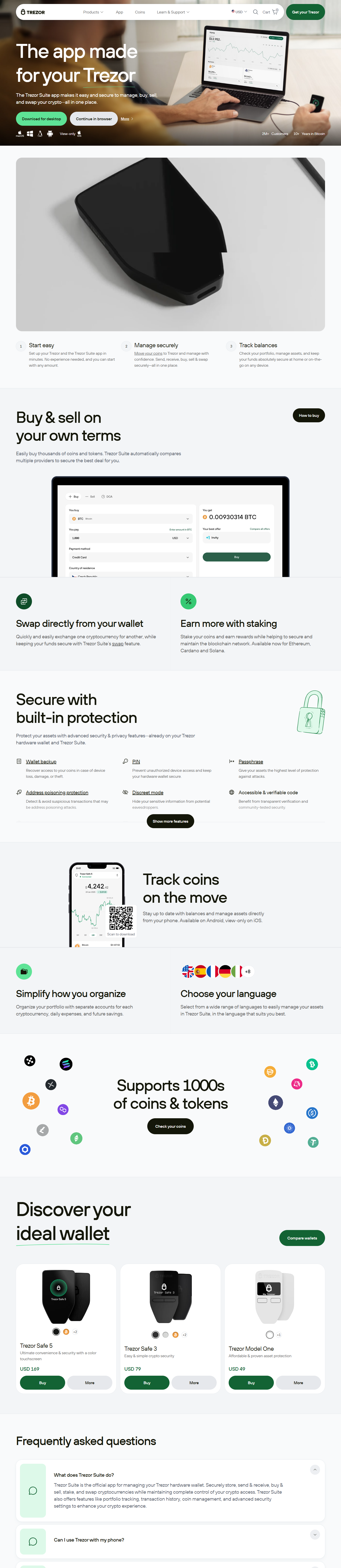
🟢 Trézor Suite — Official Trezor® Setup & Quick Guide
Setting up a hardware wallet correctly is the foundation of true cryptocurrency security. Trézor Suite — Official Trezor® Setup & Quick Guide is designed to help users understand the correct process of initializing, securing, and managing their digital assets using a reliable desktop and web-based environment. This guide focuses on safety, clarity, and long-term protection rather than shortcuts or risky practices.
Purpose of This Guide
This guide exists to help users avoid common mistakes during hardware wallet setup. Many crypto losses happen not because of hacks, but because of poor setup decisions such as unsafe recovery phrase storage or using unverified software. A structured and official setup approach ensures full ownership and protection from day one.
The guide emphasizes user responsibility, offline security, and correct verification steps.
Understanding the Setup Environment
A hardware wallet does not work alone—it requires a trusted interface. The desktop and web environment acts as a control panel, allowing users to interact with blockchain networks while keeping sensitive data offline. Private keys never leave the hardware device, and all critical actions require physical confirmation.
This separation between software and private keys is what makes hardware wallets secure.
Desktop vs Web Setup Experience
Users can complete the setup using either a desktop application or a web interface.
Desktop Setup
The desktop option is recommended for first-time setup. It runs locally on your system, reducing exposure to browser-based threats. This environment is ideal for generating recovery phrases and confirming wallet initialization securely.
Supported systems usually include Windows, macOS, and Linux.
Web Setup
The web interface offers flexibility and quick access. While still secure when used correctly, users must be extra careful to verify the official website address before connecting their device.
Step-by-Step Setup Overview
A safe setup process generally includes:
Connecting the hardware wallet to your computer
Launching the trusted desktop or web interface
Creating a new wallet on the device
Generating a recovery phrase offline
Verifying the phrase directly on the hardware screen
Each step is designed to ensure the wallet is created securely and privately.
Importance of the Recovery Phrase
The recovery phrase is the most critical element of wallet security. It is the only way to restore access to funds if the device is lost or damaged. This phrase should:
Be written down on paper
Never be stored digitally
Never be shared with anyone
Anyone with access to the recovery phrase can control the funds.
Navigating the Interface
After setup, users are presented with a simple dashboard showing balances, accounts, and recent activity. The interface is designed to reduce confusion and prevent accidental actions.
Clear prompts guide users through sending, receiving, and managing assets safely.
Managing Crypto After Setup
Once initialized, users can manage multiple cryptocurrencies through the interface. Every transaction must be approved on the hardware wallet itself. This ensures that even if a computer is compromised, funds cannot be moved without physical confirmation.
This model provides strong protection against malware and remote attacks.
Multi-Asset Wallet Management
The platform supports multiple digital assets, allowing users to manage different cryptocurrencies from a single interface. This reduces the need for multiple wallet applications and simplifies portfolio management.
Everything remains under the user’s direct control.
Privacy and Independence
Privacy is a key principle of hardware wallet usage. The setup process avoids unnecessary data sharing and does not require centralized accounts. Users interact directly with blockchain networks while maintaining anonymity and independence.
This approach aligns with the core philosophy of decentralized finance.
Optional Built-In Features
Some interfaces provide optional tools for exchanging or acquiring digital assets. These features are integrated carefully, and all actions still require hardware confirmation.
Convenience is provided without compromising security.
Common Setup Errors to Avoid
To stay safe, users should avoid:
Entering recovery phrases on websites
Downloading software from unofficial sources
Skipping verification steps
Using public or shared computers
Awareness is one of the strongest security tools.
Who This Guide Helps
This setup and quick guide is ideal for:
First-time hardware wallet users
Long-term crypto holders
Security-conscious individuals
Anyone seeking full self-custody
The instructions are written to be practical and easy to follow.
Best Practices After Setup
After completing setup:
Store the recovery phrase securely offline
Regularly verify official updates
Prefer desktop access for large balances
Never approve unknown device requests
Consistent habits ensure long-term protection.
Final Thoughts
Trézor Suite — Official Trezor® Setup & Quick Guide provides a clear and responsible approach to hardware wallet initialization. By following a proper setup process and using a trusted desktop or web interface, users can protect their digital assets from avoidable risks while maintaining full ownership.